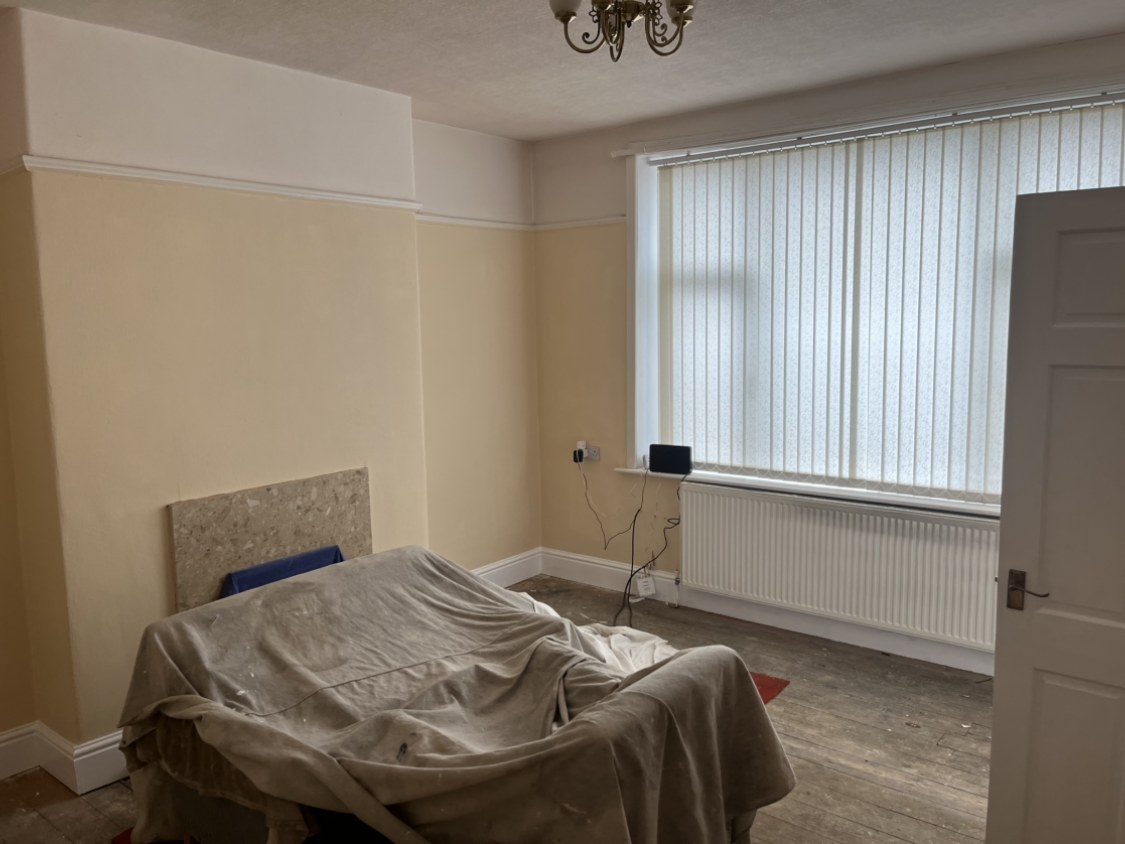
We cover the Pendle and Burnley corridor properly — not as an outlying area someone drives to when there's a gap in the diary, but as a core patch. Padiham, Nelson, Colne, Brierfield, Barrowford, Barnoldswick, Earby and Trawden are all inside twenty minutes of the yard.
Prices match the wider East Lancashire figures. A double bedroom decorated is £280 to £450. A three-bed terrace throughout is £2,200 to £3,800. A room skimmed, walls and ceiling, is £420 to £780. No travel surcharge for coming out here.
What follows is what's genuinely different about working on the housing stock across these towns — the things a contractor from outside the area tends to miss, and then charge you for as a variation halfway through.
Prices across Pendle and Padiham
| Job | Typical price, 2026 |
|---|---|
| Small bedroom, walls and ceiling | £220 – £320 |
| Double bedroom, walls and ceiling | £280 – £450 |
| Living room, walls and ceiling | £340 – £560 |
| Kitchen (cutting around units) | £260 – £420 |
| Bathroom | £180 – £300 |
| Hall, stairs and landing | £480 – £850 |
| Whole 2-bed terrace | £1,600 – £2,600 |
| Whole 3-bed terrace | £2,200 – £3,800 |
| Skim one ceiling | £160 – £260 |
| Skim room, walls and ceiling | £420 – £780 |
| Hack off and re-plaster, per m² | £45 – £70 |
| Wallpaper stripping, per room | £120 – £220 |
| Exterior, mid-terrace front | £900 – £1,600 |
| Decorator day rate | £180 – £240 |
Add roughly a third again to the room prices if you want the woodwork doing as well — skirting, architrave, doors and window boards.
What Pendle's housing stock changes
Solid stone walls, and no cavity
The mill-town terraces through Nelson, Colne, Brierfield and Padiham are overwhelmingly pre-1919 stone or brick with solid walls. There's no cavity, and in most cases no insulation.
That has a consequence people live with for years without understanding. External walls run cold. Warm, moist air from cooking, showering and drying washing hits that cold surface and condenses on it. You get black spot mould in bedroom corners, above skirtings, behind wardrobes and in the top corners of north-facing rooms.
This is the single most common thing we get called about in these towns, and it is not a decorating problem. Painting over it with standard emulsion does nothing — it's back by spring. It has to be treated at source, the moisture and ventilation addressed, and then decorated with a product suited to the wall.
Anyone who quotes you for "painting over the damp patch" without asking why it's there is not going to solve it.
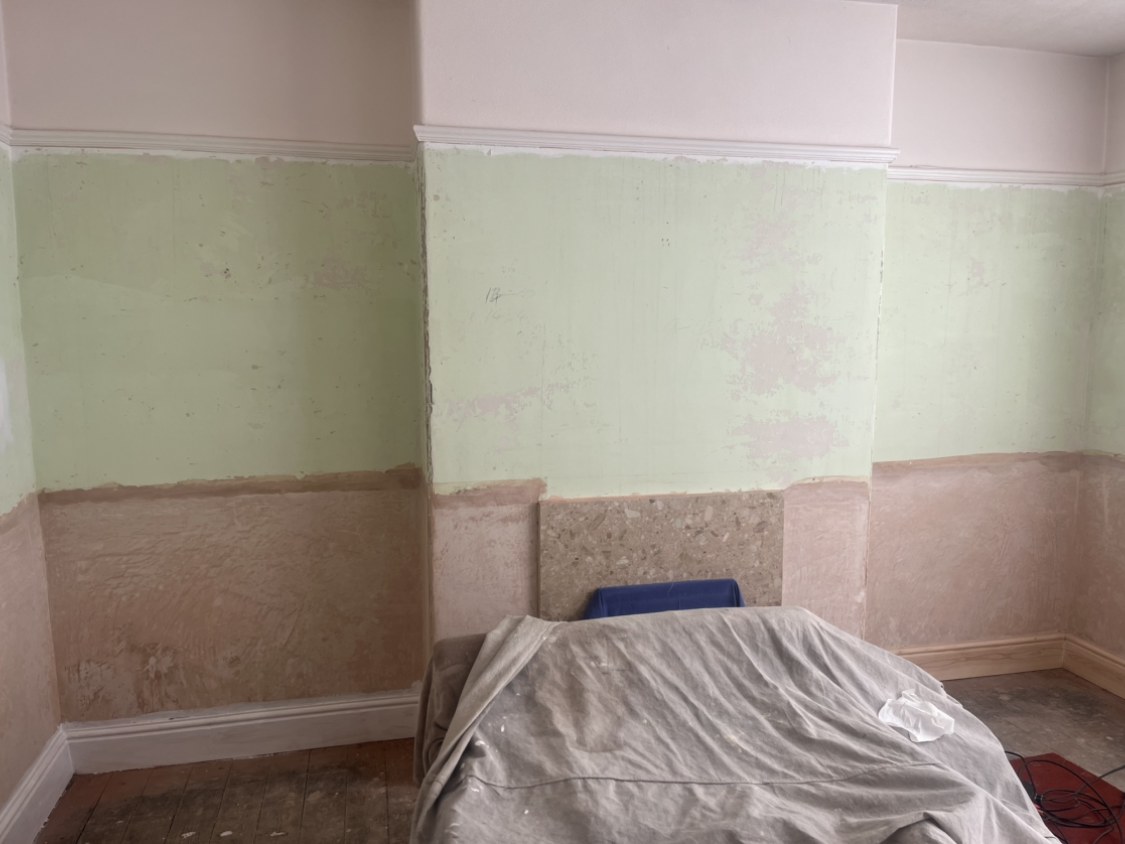
Blown plaster on external walls
Where solid walls have carried moisture for decades, the plaster loses its bond with the masonry behind. The tell is simple — tap the wall with a knuckle. Solid, dull sound means it's bonded. Hollow and drummy means it's blown.
It concentrates in the first 600mm above skirting level on external walls, and around chimney breasts. Skimming over it buys you eighteen months before it cracks along the edge, and then there are two layers to remove instead of one. How to spot blown plaster covers the test and the repair properly.
Chimney breasts
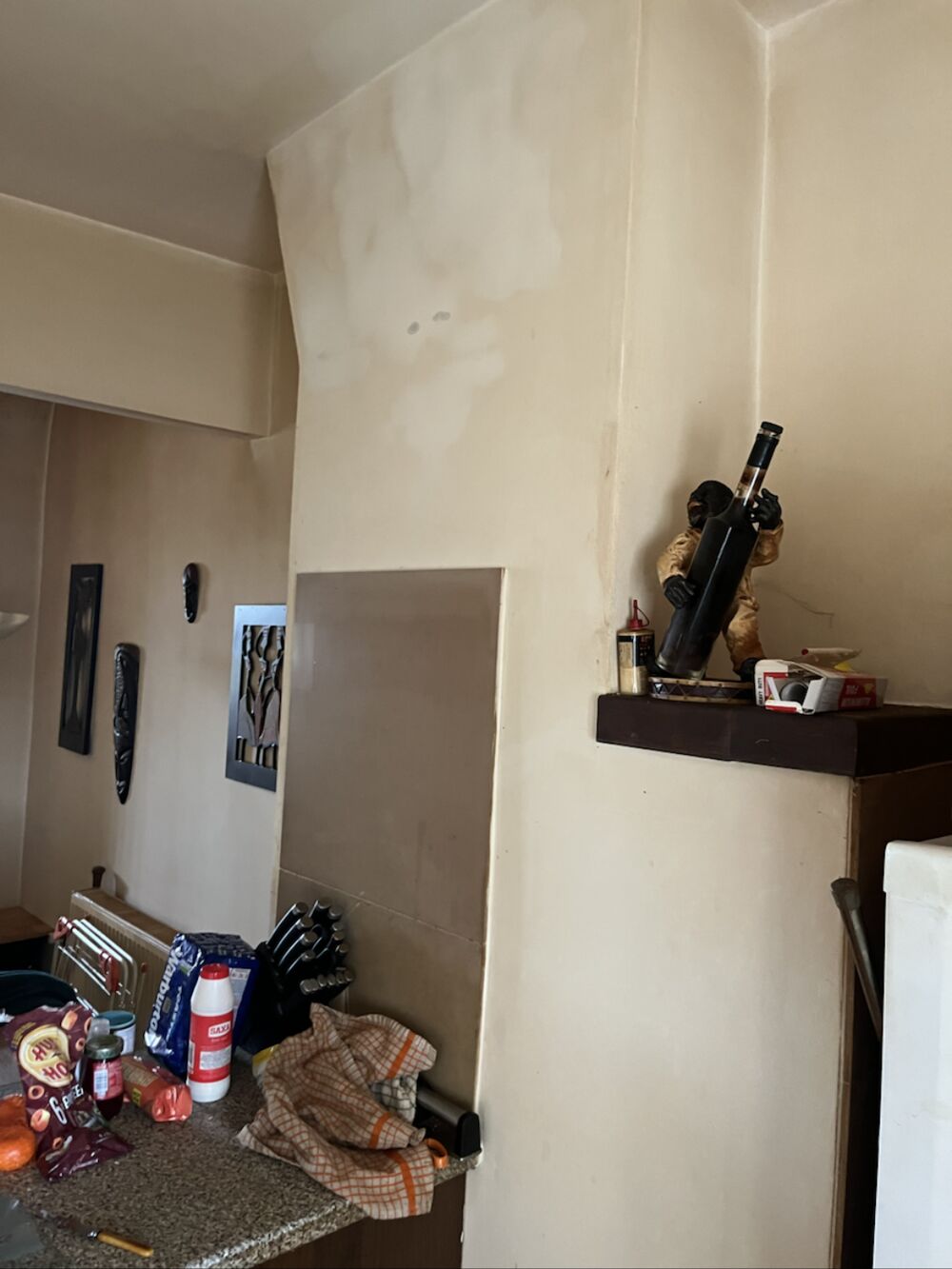
Nearly every terrace round here has them, often two or three, frequently with the fireplace removed and the opening blocked up. Two recurring problems:
Staining that bleeds through. Soot and salts in the old flue migrate through the plaster and come through emulsion no matter how many coats go on. It needs a stain-blocking primer, not more paint.
Damp from a capped stack. A flue capped without ventilation traps moisture, which then comes through the breast. Fixing the decoration without fixing the cap is money spent twice.
High ceilings in the older stock
A lot of the Victorian and Edwardian terraces here sit at 2.7m to 2.9m rather than the modern 2.4m. That's 15 to 20% more wall area per room, plus the time of working off a hop-up or tower rather than off the floor. A quote priced from floor area will come up short and the shortfall gets found halfway through the job.
Original features worth keeping
Picture rails, deep skirtings, panelled doors and cast iron fireplaces are common across Pendle and worth preserving. They also take considerably longer to paint properly than modern trim. A panelled door done correctly — cleaned, filled, sanded, primed where bare, two coats — is close to an hour. A three-bed terrace usually has eight or nine of them.
Weather and exterior cycles
Pendle sits higher and wetter than most of Lancashire. West-facing elevations take the weather hard, and exterior coatings here typically need attention every six to eight years rather than the eight to ten you'd expect further south.
There's also a specific issue with solid stone: it needs to breathe. A plastic-heavy masonry paint traps moisture inside the wall, and within a few years it blisters off, sometimes taking the face of the stone with it. Breathable mineral paint costs more per tin and is the correct answer on this stock. It's the difference between a decorating spend and a fabric repair.
What's in our quotes
- Protection — floors sheeted, furniture moved to the centre and covered, sockets and switches masked
- Washing down — sugar soap on every surface being painted, particularly kitchens and above radiators
- Filling and making good — cracks raked out and filled properly, nail holes filled, caulk run between woodwork and wall
- Sanding — filler sanded flush, existing gloss keyed so new paint grips
- Priming — bare timber, bare plaster, filler patches, and stain-blocking primer on any water, soot or nicotine staining
- Two full coats on every surface, with the product and coat count stated
- Clean-up and waste removal
Itemised by room and by surface, measured on site, held for 30 days. No deposit taken before work starts.
Plastering and decorating in one visit
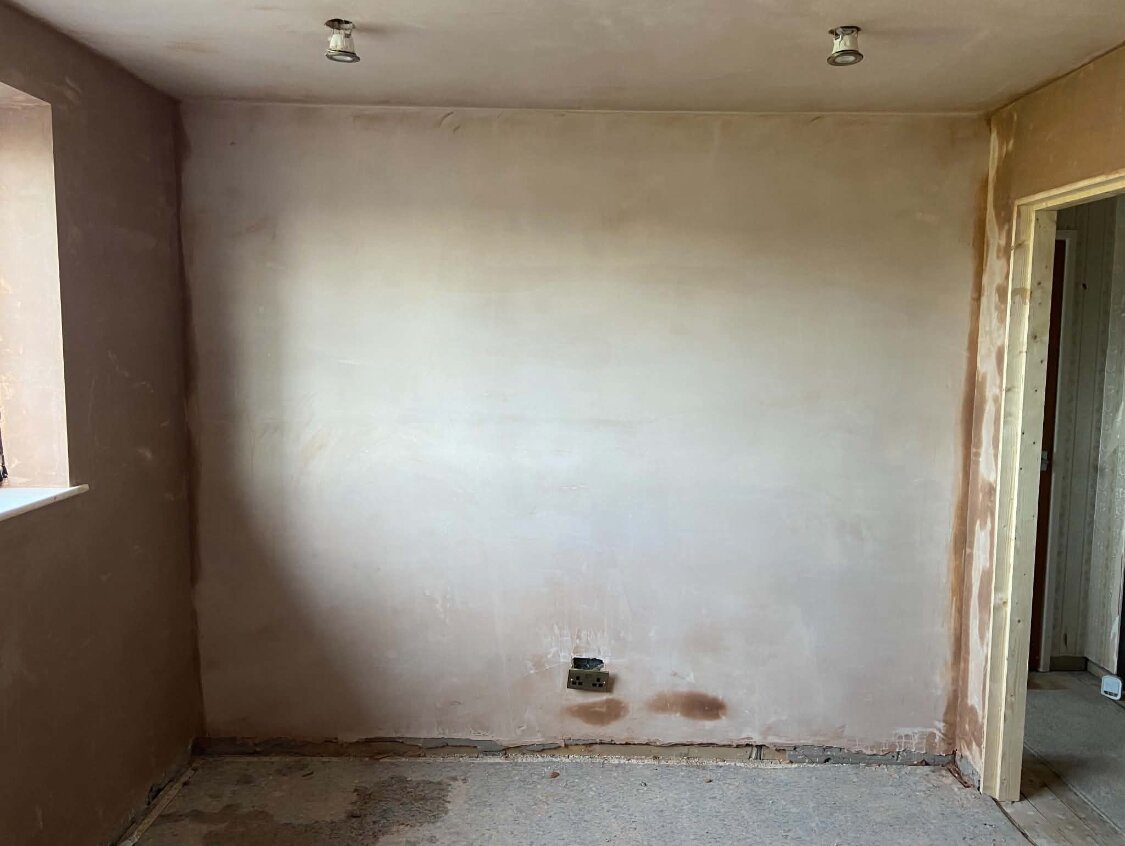
We do both trades, which matters more than it sounds on this housing stock. A decorating job here frequently becomes a plastering job the moment the wallpaper comes off — woodchip that's been up since the seventies is very often hiding plaster that needs skimming, because that's precisely what it was put up to hide.
One contractor for both removes the gap where you're waiting weeks for a plasterer to become available, and it means one person is accountable for the final finish rather than two trades pointing at each other.
Towns we cover
Pendle and Burnley: Padiham, Nelson, Colne, Brierfield, Barrowford, Barnoldswick, Earby, Trawden, Foulridge, Higham, Fence, Sabden, Worsthorne and Cliviger.
Wider East Lancashire: Burnley, Accrington, Oswaldtwistle, Great Harwood, Clitheroe, Whalley, Blackburn and Darwen.
We also work across Southport and Sefton — Birkdale, Ainsdale, Churchtown, Formby and Ormskirk — and take on work across the wider North West including Preston and Manchester for larger projects.
About us
Ascend Building Renovations Ltd is based in Burnley. Matty Anderson holds NVQ Level 3 in Painting and Decorating, a Foundation Degree in Construction and a CITB SkillBuild Award, with more than 15 years on the tools. He is the Director and works on every job personally.
We're insured, and we'll provide the certificate before work starts without being asked twice.
See our painting and decorating services, our plastering and wall repairs, our Burnley page, or book a quote.