Almost every house in the country has cracked plaster somewhere. Most of it is harmless. Some of it is telling you something you need to act on. The difficulty is that a crack caused by a bit of seasonal movement and a crack caused by something structural can look nearly identical from three feet away.
Here is how to tell them apart, and what each one actually needs.
1. Shrinkage cracks — the most common by far
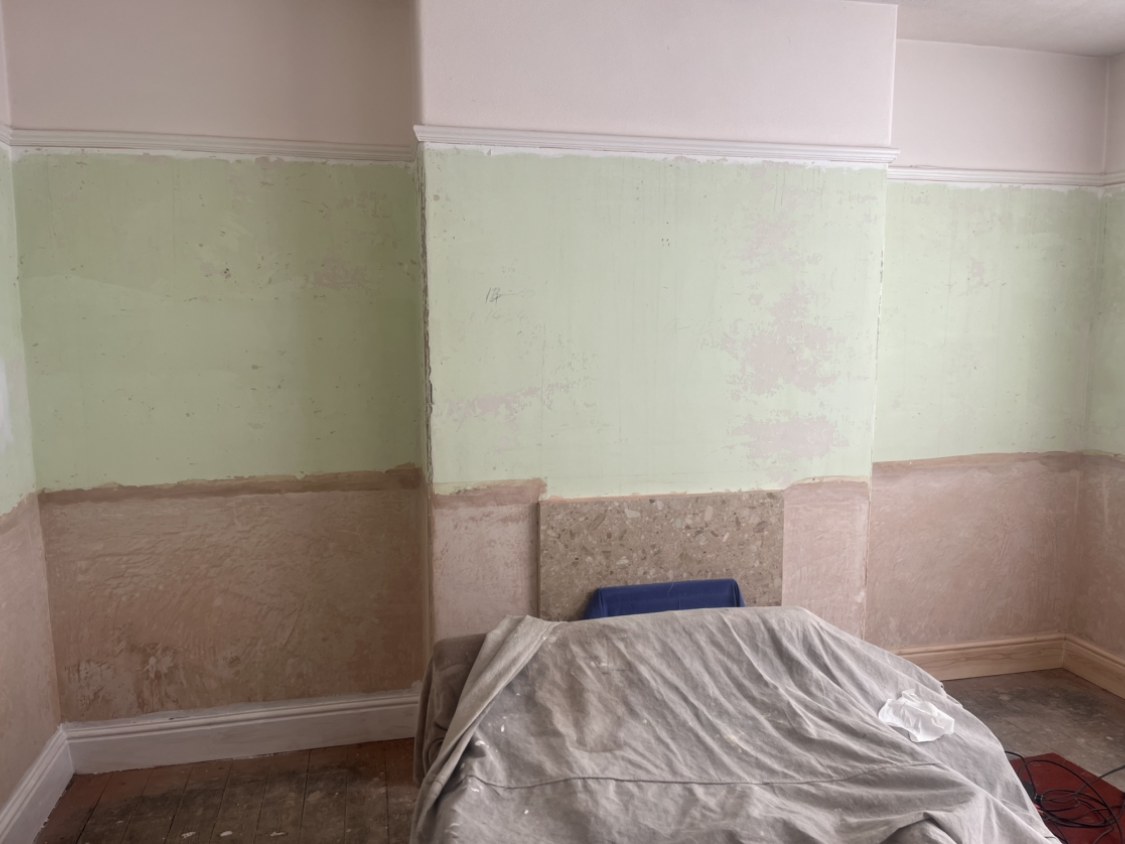
What they look like: Fine, hairline, often in a random web or map pattern. Usually under 1mm wide. Frequently appear on newly plastered walls within the first few months.
What causes them: Plaster shrinks slightly as it dries and cures. If it dried too fast — a room with the heating whacked up, a window left open in a draught, a hot summer week — it shrinks unevenly and cracks. It can also happen when the finish coat was applied a little too thick.
Does it matter: No. Cosmetically annoying, structurally irrelevant.
The fix: Rake out lightly with the corner of a scraper, fill with a flexible filler, sand, and mist coat before painting. If it's widespread across a wall, a re-skim gives a better result than fifty individual fills.
2. Settlement cracks — the ones people worry about
What they look like: Diagonal, typically running from the top corner of a door or window frame at roughly 45 degrees. Often wider at one end than the other. Commonly 1–4mm.
What causes them: The building has moved. In new builds this is normal and expected in the first two or three years as the structure settles onto its foundations. In older properties it can mean the same thing on a longer timescale, or it can mean something is actively moving.
Does it matter: Sometimes. The question is whether the movement has stopped or is ongoing.
How to tell: Fix a strip of masking tape across the crack, dated in pen. Leave it three months. If the tape has torn or wrinkled, the crack is still moving and you want a structural engineer to look before anyone plasters anything. If it's intact, the movement has settled and it's a straightforward repair.
The threshold to take seriously: A crack wider than 5mm, a crack that has visibly grown, a crack you can see daylight through, or a crack accompanied by doors and windows that have started sticking. Any of those and you want a structural opinion first. Plastering over active movement is money spent twice.
3. Thermal movement cracks
What they look like: Straight lines, often following the edge of a plasterboard sheet or appearing consistently in the same place every winter. Frequently along the wall-to-ceiling junction.
What causes them: Materials expand and contract at different rates as temperature changes. Where two different materials meet — plasterboard against masonry, a timber lintel against brick — the junction cracks. Lancashire and coastal Sefton both see a lot of this simply because of the temperature swing between an unheated night and a heated evening.
Does it matter: No, but it will come back if you fill it rigidly.
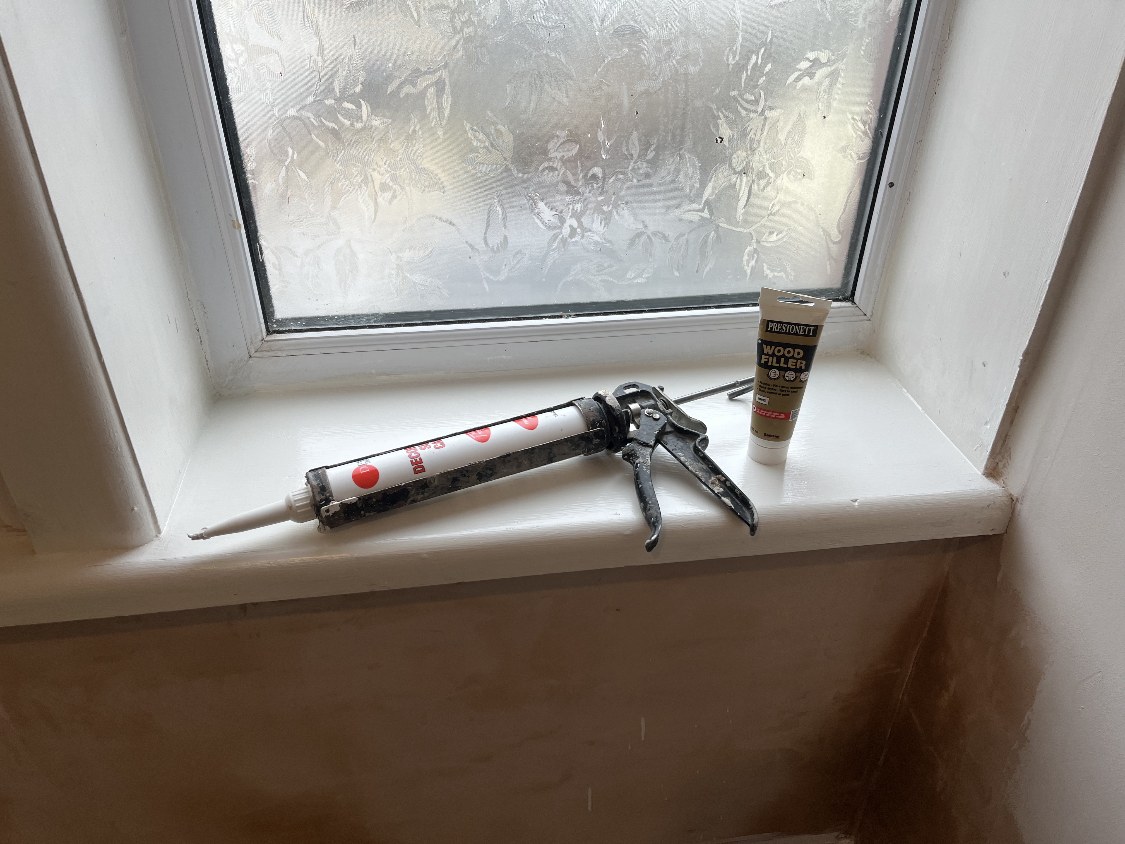
The fix: Rake out, apply scrim tape across the joint, then fill and skim over the tape. Where it's a genuine expansion joint at a wall-ceiling junction, a flexible caulk finished neatly is the honest answer — it will move without cracking, where filler will not.
4. Blown plaster — not really a crack at all
What they look like: The surface bulges slightly, or a crack appears with the plaster sitting slightly proud on one side. Tapping it sounds hollow and drummy rather than solid.
What causes them: The plaster has lost its bond with the wall behind. Usually damp, sometimes age, sometimes a poor original key on the brickwork.
Does it matter: Yes. This is not fixable by filling. The plaster has detached from the substrate and no amount of filler will re-attach it.
The fix: Hack off back to sound brick or block, treat the cause — because damp is almost always involved — apply a backing coat, then finish. It's a proper job and it costs proper money, but skimming over it just gives you a smooth surface that fails again in eighteen months. There's more on the price difference in what plastering a room costs.
5. Ceiling cracks along the joists
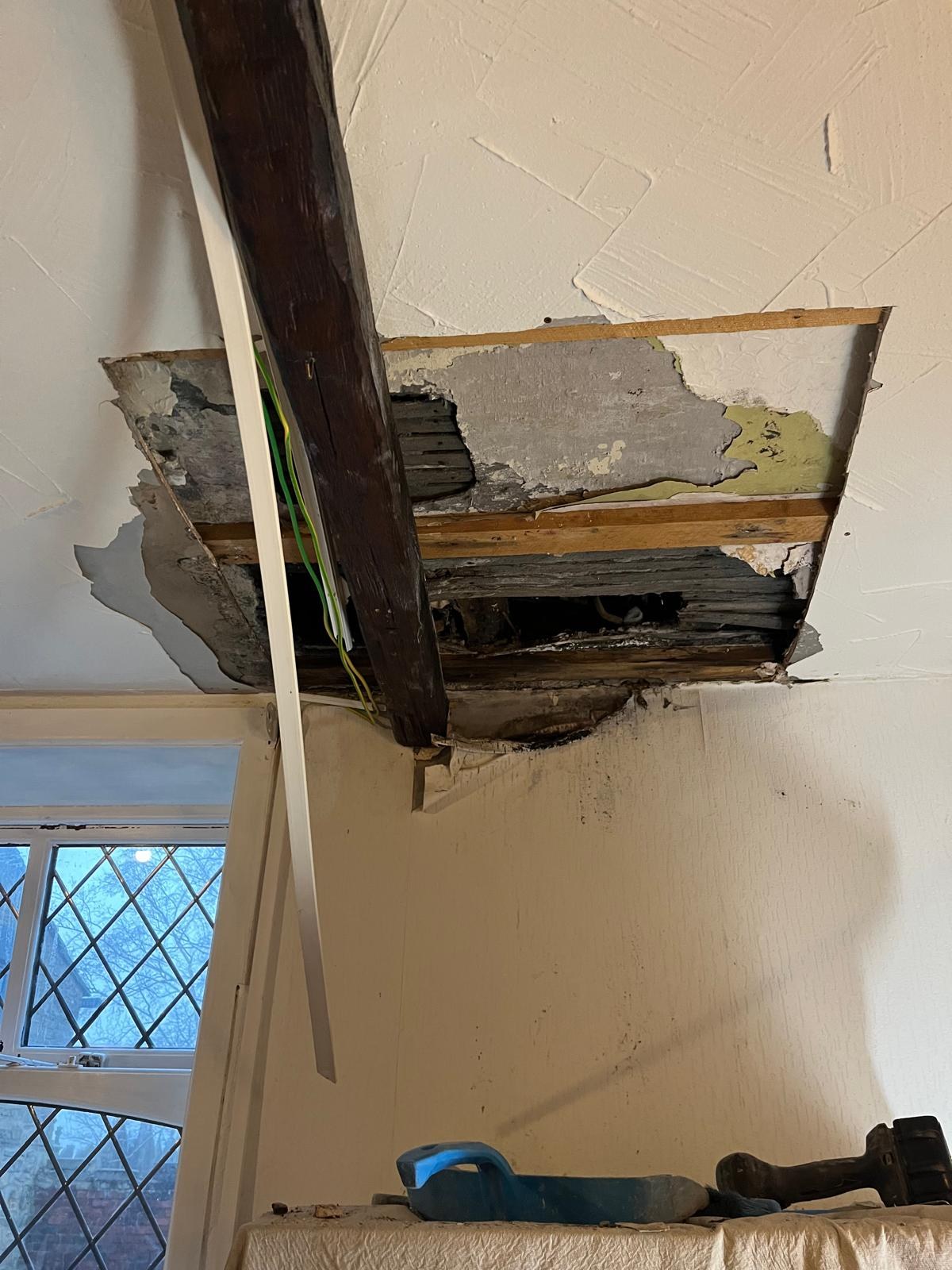
What they look like: Long, straight, parallel lines running across a ceiling at regular intervals, roughly 400mm apart.
What causes them: Deflection in the floor above. Every time someone walks across the upstairs room, the joists flex fractionally and the plaster below flexes with them. Over years, it cracks along the line of each joist. Very common in older properties and in houses where a loft has been boarded out and loaded with storage.
Does it matter: Mildly. It indicates the floor above is deflecting more than ideal, which is worth knowing but rarely urgent.
The fix: Overboarding with plasterboard and skimming is the durable answer, because it puts a continuous surface across the joists rather than a coating bonded to each one. Filling the cracks works for a while, then they come back in the same places.
6. Cracks around new work
What they look like: Cracks appearing exactly where an extension meets the original house, around a newly fitted window, or where a wall has been removed and a beam installed.
What causes them: New structure and old structure moving independently. New foundations settle at a different rate to hundred-year-old ones. It is genuinely normal for the first year or two.
Does it matter: Expected, but worth monitoring with the tape test. It should stabilise.
The fix: Wait out the first full heating season, then repair. Filling it in month two means doing it again in month eight.
The quick diagnostic
If you only remember one thing, remember the knuckle test and the tape test.
Tap the wall. Solid sound means the plaster is bonded and the crack is surface-level. Hollow sound means it has blown and needs cutting out. Then tape and date it — three months tells you whether the movement is active or finished.
Between those two you can sort the harmless majority from the small number that need someone to look properly.
Not sure what you're looking at?
Send a photo and we'll tell you straight — cosmetic fill, proper repair, or a job for a structural engineer first.
When to stop filling and get someone in
Call somebody when any of these apply:
- The crack is wider than 5mm, or wider than a 20p coin is thick
- It has grown noticeably in six months
- Doors or windows have started binding in their frames
- The crack goes through the brickwork outside as well as the plaster inside
- There is damp staining alongside the crack
- You have filled the same crack twice and it has come back both times
The last one is the honest tell. A crack that returns is a crack whose cause hasn't been dealt with, and continuing to fill it is just paying to postpone the real repair.
Getting it looked at
We handle crack repairs, patch plastering and full re-skims across Burnley, Padiham, Nelson, Colne, Accrington and Clitheroe, and across Southport, Birkdale, Ainsdale, Churchtown and Formby. If you're not sure which of the six you're looking at, send a photo — it's usually obvious from a decent close-up. See our plastering and repair work or book a look at it.