The honest answer is late April to early October, with May, June and September the three genuinely reliable months. But that's a national answer, and Lancashire isn't a national climate. We get more rain days than most of England, and the Sefton coast adds wind and salt on top.
Here's what actually governs whether exterior paint will work, and how that maps onto a real year up here.
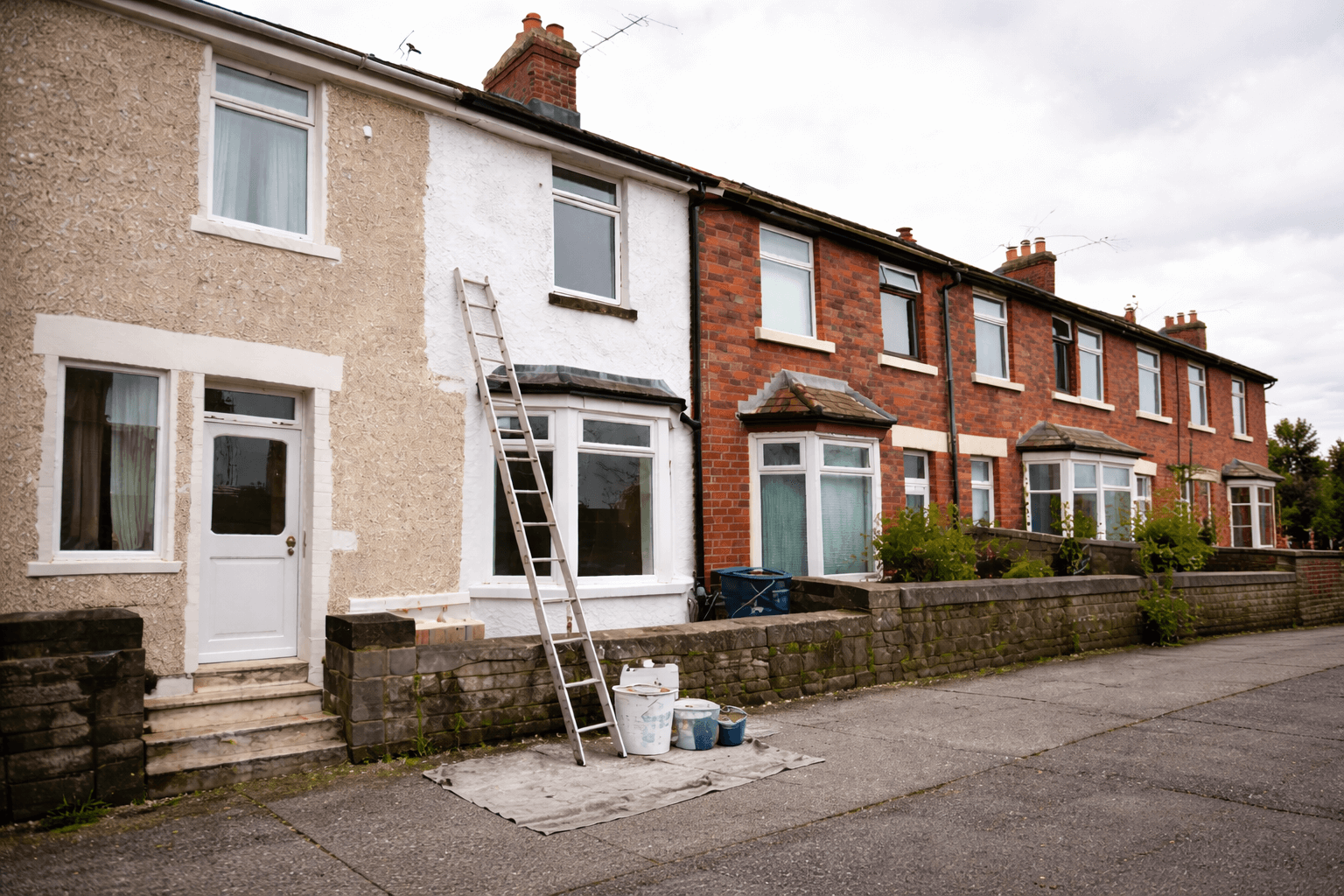
The three numbers that decide it
Forget the season for a moment. Exterior coatings care about three things.
Surface temperature above 8°C, and rising. Not air temperature — surface temperature. A north-facing wall in April can be 4°C when the air is 11°C. Below about 8°C, masonry paint won't form a proper film. It sits there looking painted and fails within a couple of years.
Relative humidity below 85%. Above that, the paint can't release its moisture and cure. On a still, damp Lancashire morning in October, humidity at 8am is routinely above 90%, which is why exterior work doesn't start at first light in autumn.
No rain for the drying window. Masonry paint typically needs four to six hours before it's rain-safe, longer in cold or humid conditions. Rain on uncured paint washes it off the wall, and you can see exactly where it happened for the next decade.
Minimum surface temperature, maximum relative humidity, and the dry window masonry paint needs before it's rain-safe.
Month by month in the North West
January and February. Effectively closed for exterior work. Surface temperatures rarely get above 8°C for long enough, and drying windows are too short. Interior season.
March. Usually too early. Occasional good weeks, but the ground and walls are still cold from winter and morning dew persists late. Good for preparation and repairs, poor for coating.
April. The window opens, usually from mid-month. Good for south and west-facing elevations. North-facing walls are still cold and often still holding winter damp.
May. One of the two best months. Long days, warming surfaces, moderate humidity, and typically before the worst of the summer thunderstorms. Books up early — enquire in February or March if you want May.
June. The other reliable month. Longest working days of the year, which matters more than people realise: you can get two coats on in a day when you've got fifteen hours of usable light.
July. Good, with a caveat. Direct sun on a south-facing wall in a heatwave can push surface temperature over 30°C, which dries paint too fast, causes lap marks and prevents proper film formation. The answer is following the shade around the building rather than working front to back, which is why a July job sometimes looks like it's being done in an odd order.
August. Similar to July. Reliable but hot spells need managing. Traditionally busy, so lead times are longest.
September. Frequently the best month of the year, and consistently underrated. Surfaces are still warm from summer, humidity has dropped from the August peak, the light is good and the thunderstorm risk has passed. Contractors have more availability than in mid-summer.
October. First half is usable. Morning starts get later — you're often waiting until 10am for dew to lift — and the working day shortens sharply. Second half is a gamble.
November and December. Closed. Anyone offering to paint your masonry in late November is either using the wrong product or is prepared to see it fail.
Why autumn often beats mid-summer
Three reasons, and none of them are obvious:
- Walls are at their driest. After a summer of warmth, moisture content in masonry is at its annual low. Paint applied to a genuinely dry wall bonds better and lasts longer.
- Fewer temperature extremes. No 30°C south-facing wall drying the paint before it can be laid off properly.
- Availability. Everyone books exterior work for June. September is quieter, which means better lead times and, frequently, better pricing.
The prep season nobody uses
March and early April are close to useless for painting but genuinely valuable for everything that comes before it: render repairs, timber repairs, rot cutting out, replacing defective cills, scaffolding erection and washing down.
Doing repairs in March and coating in May means the repairs have properly cured and dried before anything goes over them. It also splits the cost across two months, which suits a lot of people better than one large bill.
What "it's dry enough" actually means
A wall can look bone dry and still be too wet to paint. Common traps:
- After rain. Render needs two to three dry days before it's ready. Solid stone or brick needs longer — up to a week after prolonged rain.
- After pressure washing. Same rule, and the reason washing down is done days before coating, not the same morning.
- Morning dew. A wall that was clear at 4pm can be wet at 8am. This is normal and it dictates start times from September onwards.
- North elevations. Get little or no direct sun, stay damp far longer, and are almost always the last part of a job to be painted.
Booking sensibly
Work backwards from when you want it done:
- Want May? Enquire February.
- Want June or July? Enquire March or April.
- Want September? Enquire June — and you'll likely get a better slot than anyone chasing May.
- Thinking about spring? Book preparation and repairs for March, coating for May.
Exterior work is genuinely weather-dependent and a good contractor will tell you a date can move. A contractor who guarantees an exterior date in April regardless of conditions is telling you they'll paint in the wrong conditions rather than lose the slot.
Coastal timing on the Sefton side
Southport, Birkdale, Ainsdale and Formby have their own pattern. Sea breezes keep summer surface temperatures lower and more even, which is actually helpful. But wind carries salt and grit onto wet paint, and a genuinely windy day is as much a stopper as a wet one. Coastal jobs are often better done in the calmer conditions of early September than in a breezy June.
Want a slot in the right weather?
Spring and early autumn exterior slots go first. Tell us what you're planning and we'll book it for when it'll actually last.
Getting it planned
We handle exterior painting across Burnley, Padiham, Nelson, Colne, Accrington and Clitheroe, and across Southport, Birkdale, Ainsdale, Churchtown and Formby. If you're pricing it up, what exterior painting costs has the room-by-room figures. Otherwise see our exterior work or get booked in — spring and early autumn slots go first.