Plastering prices across Southport and the wider Sefton area run slightly above East Lancashire — typically 5 to 10% — but well below the national average. A standard room skimmed, walls and ceiling, is £450 to £820 in 2026. A ceiling on its own is £170 to £280.
What changes the job here isn't the price list. It's the housing stock. Southport, Birkdale, Churchtown and Ainsdale have a high proportion of large Victorian and Edwardian properties, and coastal conditions bring problems you simply don't see ten miles inland.
Price guide for Southport and Sefton
| Job | Typical price, 2026 |
|---|---|
| Skim one ceiling (up to 12m²) | £170 – £280 |
| Skim ceiling, high Victorian (3m+) | £230 – £360 |
| Skim walls only, small bedroom | £300 – £450 |
| Skim walls and ceiling, double bedroom | £450 – £820 |
| Skim walls and ceiling, large Victorian room | £750 – £1,300 |
| Overboard and skim a ceiling | £340 – £560 |
| Hack off and full re-plaster, per m² | £48 – £75 |
| Lath and plaster ceiling replacement | £600 – £1,100 per room |
| Render repair, external, per m² | £35 – £65 |
| Plasterer day rate | £190 – £260 |
What Southport property does to the job
High ceilings, and a lot of them
The Victorian stock through Southport's central grid, Birkdale Park and parts of Churchtown routinely has ceilings at 3m to 3.5m. Some of the larger Lord Street properties go higher. That changes three things: significantly more surface area per room, working from towers rather than off the floor, and the plaster having further to fall when it doesn't stick.
A large Victorian reception room can easily have 60m² of wall before you count the ceiling. That's not a bigger version of a modern bedroom — it's a different job, and it needs two people rather than one to get the coats on inside their windows.
Lath and plaster ceilings
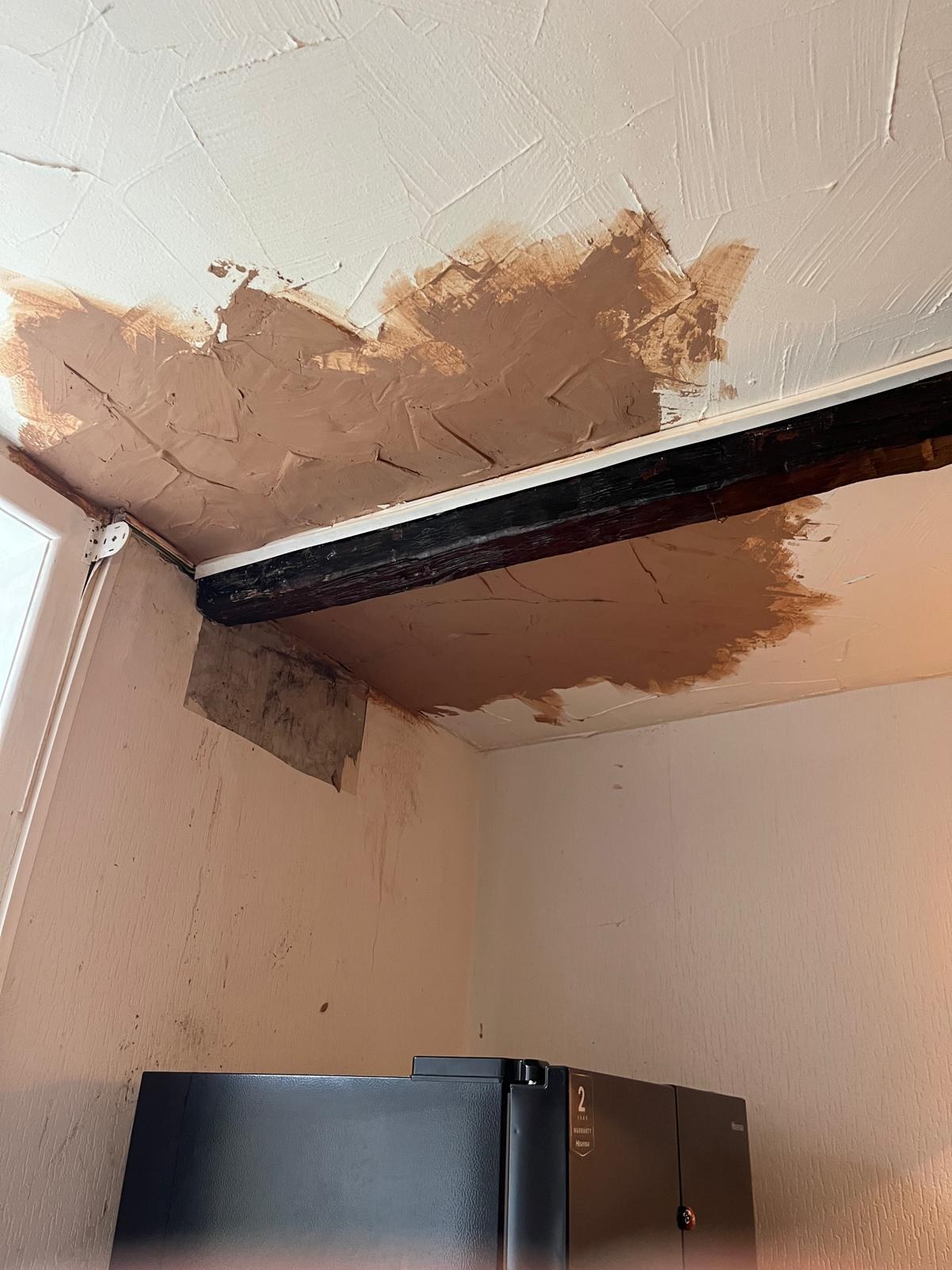
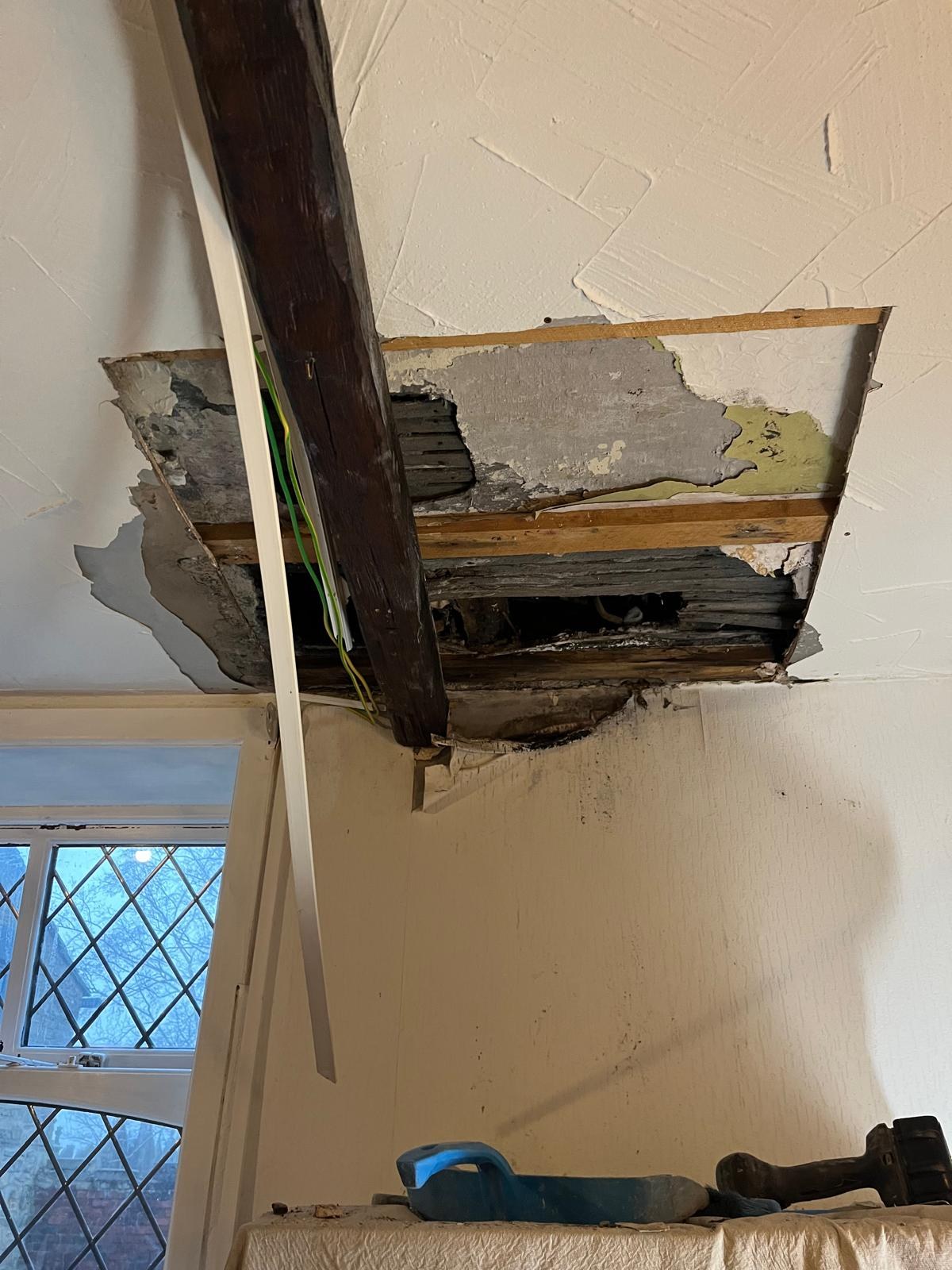
Anything pre-1930 is likely to have lath and plaster ceilings, and a good many of them are now at the end of their working life. The tell is a ceiling that sags slightly, or one that sounds hollow and flexes when pushed gently.
Where the laths are sound and the plaster is still keyed through them, overboarding is the right answer and by far the cheaper one. Where the key has failed and the plaster is only being held up by the paint, it has to come down — which is a dirty, dusty day with a skip and a full strip-out. Budget £600 to £1,100 per room for that.
Salt and coastal damp
This is the one that's genuinely different here. Salt-laden air, driving rain off the Irish Sea and high water tables in parts of Ainsdale and Birkdale all contribute to plaster failure that inland properties don't see in the same way.
Salt in masonry draws moisture out of the air. It shows up as blown, crumbling plaster low on external walls, often with a white crystalline bloom on the surface, and it will destroy standard plaster repeatedly. The fix isn't more plaster — it's a salt-retardant render system or a proper membrane, applied after the source of moisture is dealt with. Skimming over it is money you'll spend again inside two years. There's more on distinguishing this from other failures in what different cracks mean.
Original cornice and ceiling roses
Common and worth preserving. Working around original plasterwork is slow, careful, hand-finished work, and it's charged accordingly — expect £10 to £18 per metre extra where cornice is being retained and cut in around. Where a run of cornice is damaged, it can often be matched and cast rather than replaced wholesale, which is usually the better outcome and not always the more expensive one.
Skim or full re-plaster: how to tell
Tap across the wall with a knuckle. Solid means the plaster is bonded and a skim will work. Hollow and drummy means it has separated from the wall behind and no amount of finish coat will re-attach it.
On coastal properties, add a second check: run a hand along the wall about 300mm above the skirting on external walls. If it feels gritty or damp, or leaves a fine white powder on your fingers, you are looking at salt contamination and it needs treating properly rather than covering.
What a proper quote covers
- Surface area in m², ceiling shown separately from walls
- Whether it's skim only, or backing coat plus finish
- Treatment of any damp or salt contamination, stated explicitly
- Removal and disposal of old plaster, and who pays for the skip
- Protection — sheeting, masking, sealing of doorways
- Access equipment for high ceilings
- Making good around sockets, switches, coving and cornice
- Drying time before decorating can start
Got a Southport plastering job?
Measured on site, itemised, and held for 30 days. No deposit before work starts.
Where we work across Sefton
Southport, Birkdale, Ainsdale, Churchtown, Crossens, Hillside, Marshside, Banks and Tarleton, plus Formby, Freshfield, Ormskirk, Burscough, Aughton, Maghull, Lydiate and Crosby.
We also cover East Lancashire — Burnley, Padiham, Nelson, Colne, Accrington and Clitheroe. Different stock, different problems, same standard of work.
Getting a price that holds
Plastering cannot be quoted accurately over the phone. A knuckle across the wall and a look at the ceiling from a stepladder tells a plasterer in five minutes whether it's a skim or a strip-out, and that answer is several hundred pounds wide.
Ours are measured on site, itemised, and held for 30 days. No deposit before work starts. Ascend Building Renovations Ltd is a limited company with public liability insurance, and Matty holds NVQ Level 3 in Painting and Decorating, a Foundation Degree in Construction and a CITB SkillBuild Award.
See our plastering services, the general full room plastering costs guide, or request a quote.